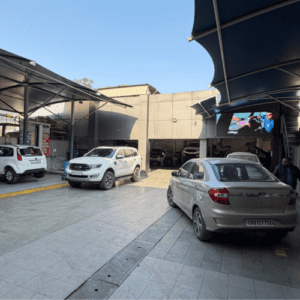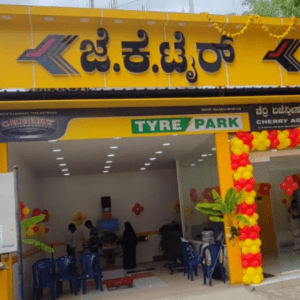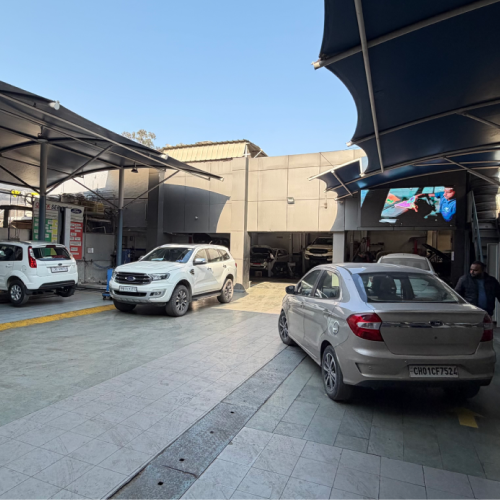
When we drove into the industrial area of Chandigarh on a March morning, we weren’t expecting much. A working garage. A machine running. Maybe a quick demo.
What we found instead was a fully operational DPF Cleaning Centre — busy, professional, and already serving diesel vehicles from across Punjab and Haryana. At the heart of it all was a professional DPF Cleaning Machine, humming steadily, doing exactly what it was built to do.
This is a first-hand account of what a real DPF cleaning business looks like in India—the setup, the results, and the insights from the man who built it.
The Problem That Started Everything
India’s diesel vehicle population is one of the largest in the world. While BS4 vehicles still run in significant numbers, BS6 vehicles—with their sophisticated emissions systems—are now entering the market at scale. With them comes a component most garage owners were unprepared for: the Diesel Particulate Filter (DPF).
The DPF is a ceramic honeycomb filter designed to trap soot particles. However, due to India’s unique driving conditions—stop-start traffic, short trips, and heavy congestion—these filters clog frequently.
Symptoms of a Clogged DPF:
Loss of engine power
Black smoke from the exhaust
DPF warning light on the dashboard
Reduced fuel efficiency
Limp mode (in severe cases)
The traditional solution was replacement, costing anywhere from ₹40,000 to ₹1,50,000. DPF cleaning is the cost-effective alternative whose time has finally come in India.
Walking Into the Garage
The facility we visited is a multi-bay garage with over a decade of experience. The owner, a veteran who transitioned from carburetors to direct injection, decided to invest in a professional DPF Cleaning Machine after researching the European market.
“Europe has been doing this for 10 years,” he told us. “India is just starting. I wanted to be first here.”
The setup is a model of efficiency. Cars are lined up, bays are occupied, and the DPF Cleaning Machine sits prominently in a main bay, acting as a high-tech anchor for the business.
The Step-by-Step Cleaning Process
A professional DPF Cleaning Machine is not a simple chemical flush; it is a specialized station used by authorized service centers. Here is the workflow we witnessed:
| Step | Action | Description |
| 1 | Diagnosis | Technician reads the DPF pressure differential via the OBD port to establish a blockage baseline. |
| 2 | Removal | The DPF unit is removed from the vehicle (typically takes 30–60 minutes). |
| 3 | Cleaning Cycle | The filter is placed in the machine. Specialized fluid is circulated at controlled pressures to break down soot and ash. |
| 4 | Drying | The filter undergoes a thorough drying phase to ensure no moisture remains. |
| 5 | Verification | A post-cleaning pressure test confirms restored flow before the unit is refitted. |
The Result: The entire process takes 3 to 4 hours. The cost to the customer is typically ₹8,000 to ₹15,000—a fraction of the cost of a new unit.
Insights from the Owner
The owner invested in his machinery through V-Tech India. According to him, the onboarding was seamless, including technical training and marketing guidance.
Key Business Takeaways:
Fast ROI: “The machine paid for itself faster than I expected,” he noted, citing the massive volume of diesel SUVs and trucks in the region.
The Trust Factor: By educating customers about DPF maintenance before it becomes a crisis, the garage builds long-term loyalty.
Professionalism Matters: Industry certifications and manufacturer-backed standards on the wall give customers the confidence to trust the garage with their high-end SUVs.
Who is the DPF Cleaning Market in India?
The demand comes from three primary segments:
Individual SUV Owners: Owners of Fortuners, Endeavours, Harriers, and Safaris who want to avoid massive replacement bills.
Commercial Fleet Operators: The backbone of North India’s logistics. For them, DPF maintenance is essential for operational uptime.
Referral Networks: Smaller independent workshops that subcontract cleaning to specialized centers like this one.
The Bigger Picture: Why Now?
Since the BS6 transition in April 2020, millions of DPF-equipped vehicles are now on Indian roads. These vehicles are now 4–6 years old—the exact age where DPFs typically require their first major service. The market isn’t coming; it’s already here.
What V-Tech India Offers Garage Owners:
Equipment: Supply and installation of professional DPF Cleaning Machines.
Training: Comprehensive technical training for staff.
Branding: Positioning your garage as a “Specialist DPF Centre.”
Supplies: Proprietary cleaning fluids and ongoing support.
Closing Thought
The garage owner in Chandigarh summarized it perfectly: “Pehle aane wala faayda uthata hai” (The early bird gets the advantage).
The workshops that invest now in the right equipment and expertise will own this service category in their city for the next decade. The question isn’t whether DPF cleaning will become mainstream—it’s whether your garage will be the one providing it.